
Half Cut vs Nose Cut: What's the Difference?
If you're shopping for used auto parts, you've probably come across the terms half cut and nose cut. While they may sound similar, they serve very different purposes. Here is a simple breakdown to help you decide which one is right for your project.
What is a Half Cut?
A half cut is roughly the front half of a vehicle, cut from just behind the front seats. It includes everything forward of that point: the engine, transmission, dashboard, wiring harness, ECU, steering system, and often the front suspension.
What You Get with a Half Cut
- Engine and transmission
- Complete wiring harness and ECU
- Dashboard and instrument cluster
- Steering system (rack, column, wheel)
- Front suspension and brakes (depending on the cut)
- Sometimes the front doors and other trim pieces
Half cuts are popular for engine swaps because everything is self-contained — you get all the wiring, sensors, and mounting hardware needed for a complete transplant.
What is a Nose Cut?
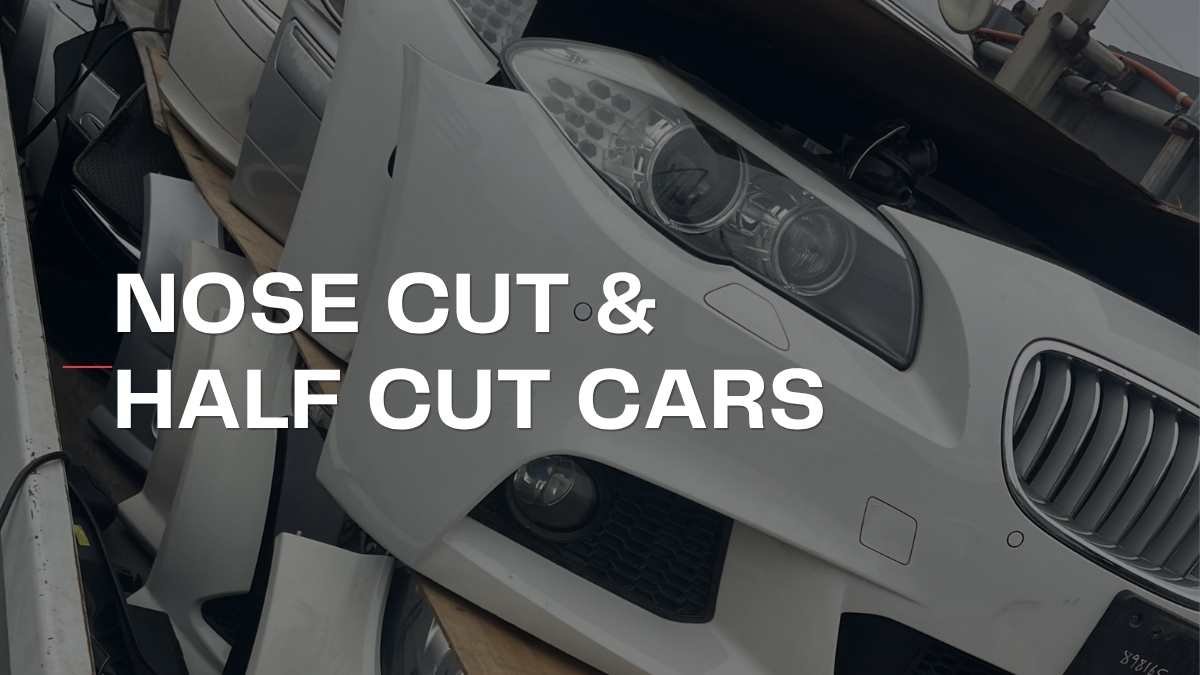
A nose cut is the front section from the windshield forward. It includes the bonnet, headlights, front bumper, grille, fenders, and radiator support. Unlike a half cut, it generally does not include the engine, transmission, or dashboard.
What You Get with a Nose Cut
- Front bumper and grille
- Headlights and indicator lights
- Front fenders (wings)
- Bonnet/hood
- Radiator and cooling components
- Front subframe (sometimes)
- Occasionally the front suspension
Nose cuts are primarily used for cosmetic repairs, replacing a damaged front end after an accident or restoring a classic car to its original appearance.
Quick Comparison
| Feature | Half Cut | Nose Cut |
|---|---|---|
| Cut Line | Behind front seats | Windshield forward |
| Engine & Transmission | Included | Not included |
| Dashboard & Wiring | Included | Not included |
| Front Body Panels | Usually included | Included |
| Best For | Engine swaps, full conversions | Front-end repairs, cosmetic restoration |
| Shipping Cost | Higher (larger volume) | Lower (more compact) |
Which One Should You Choose?
Choose a Half Cut If:
- You are doing an engine swap and need all the wiring, ECU, and sensors
- You want to convert a left-hand drive car to right-hand drive
- You are restoring a car and want a complete donor vehicle
- You have the space and tools to store and work with a large section
Choose a Nose Cut If:
- You need to repair front-end damage after an accident
- You are restoring the appearance of a classic car
- You only need cosmetic parts like bumpers, headlights, and fenders
- You want to save on shipping costs
Things to Consider
Cost and Shipping
Half cuts are larger and heavier, so they cost more to ship. They require a full container for export.
Nose cuts are more compact and can be shipped more affordably.
Condition
Both cuts are sold as-is from Japanese dismantling yards. They are generally from auction vehicles, usually damaged or high-mileage cars, but the condition can vary significantly. Always ask for photos and inspect the auction sheet carefully.
Compatibility
Make sure the cut matches the same generation and trim level of your vehicle. A half cut from a 1992 JZX90 Chaser is different from a 1992 Crown, even though they look similar.
The Bottom Line
| Your Goal | Recommended Cut |
|---|---|
| Engine swap or full conversion | Half cut |
| Front-end repair or restoration | Nose cut |
| Budget-friendly cosmetic fix | Nose cut |
| Complete donor for a project car | Half cut |
Both options give you access to genuine Japanese parts that are hard to find elsewhere. Choose the one that matches your project, budget, and shipping needs.
Need Help Finding a Cut?
At iGETAUTO, we handle the cutting and dismantling of vehicles right in our own yard. We ship dismantled vehicles, half cuts, nose cuts, and bulk engine orders worldwide by container.
Contact us today to get started.